

Le mot anglais du jour
rabbit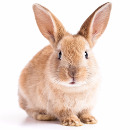
lapin
Définitions
| anglais > français | |
| rabbit | |
| 1. n. (Zoologie) Lapin, nom générique de plusieurs genres de lagomorphes. | |
| 2. v. Chasser le lapin. | |
| 3. v. (GB) Parler sans cesse de façon enfantine et irritante. | |
| anglais > anglais | |
| rabbit | |
| 1. n. A mammal of the family Leporidae, with long ears, long hind legs and a short, fluffy tail. |  |
| The pioneers survived by eating the small game they could get: rabbits, squirrels and occasionally a raccoon. | |
| 2. n. The fur of a rabbit typically used to imitate another animal's fur. | |
| 3. n. A runner in a distance race whose goal is mainly to set the pace, either to tire a specific rival so that a teammate can win or to help another break a record; a pacesetter. | |
| 4. n. (cricket) A very poor batsman; selected as a bowler or wicket-keeper. | |
| 5. n. (comptheory) A large element at the beginning of a list of items to be bubble sorted, and thus tending to be quickly swapped into its correct position. Compare turtle. | |
| 6. v. (intransitive) To hunt rabbits. | |
| 7. v. (US, intransitive) To flee. | |
| The informant seemed skittish, as if he was about to rabbit. | |
| 8. v. (UK, intransitive) To talk incessantly and in a childish manner; to babble annoyingly. | |
| Stop your infernal rabbiting! Use proper words or nobody will listen to you! | |
| Commonly used in the form "to rabbit on". | |
| français > anglais | |
| lapin | |
| 1. n-m. rabbit | |
Prononciation

Exemples de phrases
| "Forever and always!" replied the little white rabbit. "Pour toujours et à tout jamais!" répondit le petit lapin blanc. Like all dogs, he'll chase a rabbit if he sees one. Comme tous les chiens, il va pourchasser un lapin s'il en voit un. "I wish you were all mine!" said the little black rabbit. "Si seulement tu pouvais entièrement être à moi!" dit le petit lapin noir. "What's the matter?" asked the little white rabbit. "Qu'est-ce qui ne va pas?" demanda le petit lapin blanc. I can't have a child so I bought a rabbit instead. Je ne peux pas avoir d'enfant alors j'ai acheté un lapin, à la place. |
Revoir les mots précédents
| Netherlands | raspberry | boulder | root |
| frizzy | jellyfish | today | rainbow |
| Monday | bear | eighty-four | sixty-eight |
| teacher | fruit | car park | long |
Aléatoire
| deer | step-mother | dressing table | baby food |
| staple | sled | detergent | letter box |
| calf | eye | screw | target |
| wasp | oil | bread | knight |
| Apprendre |
| Mot du jour |
| Choix multiple |
| Cartes flash |
| Loto |
| Image cachée |
| Jeu du pendu |
| Mots cachés |
| Memory |
| Mots croisés |
Procurez-vous notre livre de mots croisés pour débutants
| Abonnez-vous au mot du jour |
| Email: |