

Le mot anglais du jour
meat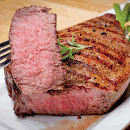
viande
Définitions
| anglais > français | |
| meat | |
| 1. n. Viande. | |
| He scuttled to the back of the cave, where he found the bone of a buck with some meat on it, and sat cracking the end merrily. (The Jungle Book - Rudyard Kipling) | |
| Il obliqua vers le fond de la caverne, y trouva un os de chevreuil où restait quelque viande, s'assit et en fit craquer le bout avec délices. | |
| anglais > anglais | |
| meat | |
| 1. n. The flesh (muscle tissue) of an animal used as food. |  |
| A large portion of domestic meat production comes from animals raised on factory farms. | |
| The homesteading teenager shot a deer to supply his family with wild meat for the winter. | |
| 2. n. A type of meat, by anatomic position and provenance. | |
| The butchery's profit rate on various meats varies greatly. | |
| 3. n. (now archaic, dialectal) Food, for animals or humans, especially solid food. See also meat and drink. | |
| 4. n. (now rare) A type of food, a dish. | |
| 5. n. (now archaic) A meal. | |
| 6. n. Any relatively thick, solid part of a fruit, nut etc. | |
| The apple looked fine on the outside, but the meat was not very firm. | |
| 7. n. (slang) A penis. | |
| 8. n. (colloquial) The best or most substantial part of something. | |
| We recruited him right from the meat of our competitor. | |
| 9. n. (sports) The sweet spot of a bat or club (in cricket, golf, baseball etc.). | |
| He hit it right on the meat of the bat. | |
| 10. n. A meathead. | |
| Throw it in here, meat. | |
| 11. n. (Australian Aboriginal) A totem, or (by metonymy) a clan or clansman which uses it. | |
| français > anglais | |
| viande | |
| 1. n-f. meat | |
| 2. n-f. (obsolete) food | |
| 3. n-f. (sexuality) an object of sexual desire; a piece of meat | |
Prononciation

Exemples de phrases
| Meat won't keep long in this heat. La viande ne se gardera pas longtemps avec cette chaleur. Please freeze the fish and meat. Surgelez le poisson et la viande, s'il vous plaît. I like meat, but eggs do not agree with me. J'aime la viande, mais les œufs sont indigestes pour moi. I only eat meat about three or four times a month. Je ne mange de la viande que trois ou quatre fois par mois. Meat should not be eaten raw. La viande ne devrait pas être mangée crue. |
Revoir les mots précédents
| raspberry | boulder | root | frizzy |
| jellyfish | today | rainbow | Monday |
| bear | eighty-four | sixty-eight | teacher |
| fruit | car park | long | color |
Aléatoire
| pebble | walrus | shorts | seventy-one |
| oats | wingspan | shirt | round |
| daisy | seventy-nine | read | groceries |
| gear stick | mashed potato | melon | kid |
| Apprendre |
| Mot du jour |
| Choix multiple |
| Cartes flash |
| Loto |
| Image cachée |
| Jeu du pendu |
| Mots cachés |
| Memory |
| Mots croisés |
Procurez-vous notre livre de mots croisés pour débutants

| Abonnez-vous au mot du jour |
| Email: |