

Le mot anglais du jour
bus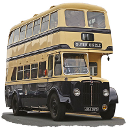
autobus
Définitions
| anglais > français | |
| bus | |
| 1. n. (Transport) Autobus (de la ville), bus (familier). | |
| 2. n. (Transport) Autocar (routier), car (familier). | |
| 3. n. (Informatique) Bus (connecteur électrique d'un ordinateur). | |
| 4. v. Transporter par bus (ou par car). | |
| The children are being bussed to school. | |
| 5. v. Emporter les plateaux ou assiettes après que la nourriture ait été mangée. | |
| Will everyone please bus their own trays when they're done eating? | |
| anglais > anglais | |
| bus | |
| 1. n. (automotive) A motor vehicle for transporting large numbers of people along roads. |  |
| 2. n. An electrical conductor or interface serving as a common connection for two or more circuits or components. | |
| 3. n. (medical industry, slang) An ambulance. | |
| 4. v. (transitive, automotive, transport) To transport via a motor bus. | |
| 5. v. (transitive, automotive, transport, chiefly US) To transport students to school, often to a more distant school for the purposes of achieving racial integration. | |
| 6. v. (intransitive, automotive, transport) To travel by bus. | |
| 7. v. (transitive, US, food service) To clear meal remains from. | |
| He bussed tables as the restaurant emptied out. | |
| 8. v. (intransitive, US, food service) To work at clearing the remains of meals from tables or counters; to work as a busboy. | |
| He’s been bussing for minimum wage. | |
| français > anglais | |
| autobus | |
| 1. n-m. bus, coach (vehicle) | |
Prononciation

Exemples de phrases
| I had my wallet stolen on the bus. Je me suis fait voler mon portefeuille dans le bus. I was on the bus. J'étais dans le bus. She was in time for the bus. Elle est arrivée à temps pour son bus. How long ago did the bus leave? Depuis combien de temps le bus est-il parti ? The bus should be here by now. Le bus devrait être ici maintenant. |
Revoir les mots précédents
| boulder | root | frizzy | jellyfish |
| today | rainbow | Monday | bear |
| eighty-four | sixty-eight | teacher | fruit |
| car park | long | color | old |
Aléatoire
| pajamas | winter | sugar | fog |
| eighty-eight | eighty | conductor | scatter |
| nurse | orchestra | scraper | rice |
| gardener | ferry | pill | blackboard |
| Apprendre |
| Mot du jour |
| Choix multiple |
| Cartes flash |
| Loto |
| Image cachée |
| Jeu du pendu |
| Mots cachés |
| Memory |
| Mots croisés |
Procurez-vous notre livre de mots croisés pour débutants

| Abonnez-vous au mot du jour |
| Email: |