

Le mot anglais du jour
water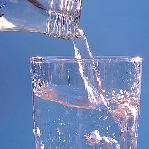
eau
Définitions
| anglais > français | |
| water | |
| 1. n. (Chimie) Eau. | |
| 2. n. (Au pluriel) Eaux, étendue d'eau. | |
| 3. v. Arroser. | |
| I need to water the flowers. | |
| Il faut que j'arrose les fleurs. | |
| 4. v. Moirer, en parlant de tissus ou de métaux. | |
| anglais > anglais | |
| water | |
| 1. n. A substance (of molecular formula H₂O) found at room temperature and pressure as a clear liquid; it is present naturally as rain, and found in rivers, lakes and seas; its solid form is ice and its gas |  |
| By the action of electricity, the water was resolved into its two parts, oxygen and hydrogen. | |
| 2. n. (in particular) The liquid form of this substance: liquid H₂O. | |
| May I have a glass of water? | |
| Your plants need more water. | |
| 3. n. A serving of liquid water. | |
| 4. n. (alchemy, philosophy) The aforementioned liquid, considered one of the Classical elements or basic elements of alchemy. | |
| He showed me the river of living water, sparkling like crystal, flowing from the throne of God. | |
| 5. n. (or in the plural) Water in a body; an area of open water. | |
| The boat was found within the territorial waters. | |
| These seals are a common sight in the coastal waters of Chile. | |
| 6. n. (poetic, archaic, or dialectal) A body of water, almost always a river. | |
| 7. n. A combination of water and other substance(s). | |
| 8. n. (sometimes ) Mineral water. | |
| Perrier is the most popular water in this restaurant. | |
| 9. n. (often, in the plural) Spa water. | |
| Many people visit Bath to take the waters. | |
| 10. n. (pharmacy) A solution in water of a gaseous or readily volatile substance. | |
| ammonia water | |
| 11. n. Urine. | |
| 12. n. Amniotic fluid; used only in the plural in the UK but often also in the singular in North America, especially to avoid cacophony, as in this example: ( | |
| Before the child is born, the pregnant woman’s water breaks. (North America) | |
| Before your child is born, your water(s) will break. (North America) | |
| Before the child is born, the pregnant woman’s waters break. (UK) | |
| 13. n. (colloquial, medicine) Fluids in the body, especially when causing swelling. | |
| He suffers from water on the knee. | |
| 14. n. (figuratively, in the or in the singular) A state of affairs; conditions; usually with an adjective indicating an adverse condition. | |
| The rough waters of change will bring about the calm after the storm. | |
| 15. n. (colloquial, figuratively) A person's intuition. | |
| I know he'll succeed. I feel it in my waters. | |
| 16. n. (dated, finance) Excess valuation of securities. | |
| 17. n. The limpidity and lustre of a precious stone, especially a diamond. | |
| a diamond of the first water is perfectly pure and transparent | |
| 18. n. A wavy, lustrous pattern or decoration such as is imparted to linen, silk, metals, etc. | |
| 19. v. To pour water into the soil surrounding (plants). | |
| 20. v. To wet or supply with water; to moisten; to overflow with water; to irrigate. | |
| 21. v. To provide (animals) with water for drinking. | |
| I need to go water the cattle. | |
| 22. v. (intransitive) To get or take in water. | |
| The ship put into port to water. | |
| 23. v. (transitive, colloquial) To urinate onto. | |
| Nature called, so I stepped into the woods and watered a tree. | |
| 24. v. To dilute. | |
| Can you water the whisky, please? | |
| 25. v. (transitive, dated, finance) To overvalue (securities), especially through deceptive accounting. | |
| 26. v. (intransitive) To fill with or secrete water. | |
| Chopping onions makes my eyes water. | |
| The smell of fried onions makes my mouth water. | |
| 27. v. To wet and calender, as cloth, so as to impart to it a lustrous appearance in wavy lines; to diversify with wavelike lines. | |
| to water silk | |
| français > anglais | |
| eau | |
| 1. n-f. water, a liquid that is transparent, colorless, odorless and tasteless in its pure form, the primary constituent of lakes, rivers, seas and oceans | |
| Il buvait un verre d’eau fraîche. - He drank a cool glass of water. | |
| L’eau de mer et l’eau de rivière n’ont pas la même teneur en sel et n’abritent donc pas les mêmes poissons. - Sea water and river water do not have the same salt content and thus do not harbor | |
| 2. n-f. In particular, rain | |
| Si le vent dure, nous aurons de l’eau. - If the wind persists, we will have rain. | |
| 3. n-f. (chemistry) the chemical compound with molecular formula H2O existing in the form of ice, liquid water or steam | |
| L’eau se durcit par le froid et se vaporise par la chaleur. - Water hardens with cold and vaporises with heat. | |
| 4. n-f. Natural liquid quantities or expanses | |
| Le soir, ils se baignaient dans les eaux du lac Titicaca. - In the evening, they bathed in the waters of Lake Titicaca. | |
| 5. n-f. Fluids such as sweat, formed and found in the body of man or animal | |
| Les vésicatoires font des ampoules pleines d’eau. - Vesicants make blisters full of fluid. | |
| L’eau m'en vint à la bouche. - That made my mouth water. | |
| Il s’est échauffé à courir, il est tout en eau. - He warmed up to run. He's all sweaty. | |
Exemples de phrases
| We don't drink enough water. Nous ne buvons pas assez d'eau. It's a pity that they've blocked off the main street because of a burst water main. C'est dommage qu'ils aient bloqué la rue principale pour une canalisation d'eau éclatée. Her body was already in the water from the waist down. Son corps était déjà immergé à partir de la taille. They have plenty of water. Ils disposent de plein d'eau. Drink a lot of water. Bois beaucoup d'eau. |
Revoir les mots précédents
| boulder | root | frizzy | jellyfish |
| today | rainbow | Monday | bear |
| eighty-four | sixty-eight | teacher | fruit |
| car park | long | color | old |
Aléatoire
| Apprendre |
| Mot du jour |
| Choix multiple |
| Cartes flash |
| Loto |
| Image cachée |
| Jeu du pendu |
| Mots cachés |
| Memory |
| Mots croisés |
Procurez-vous notre livre de mots croisés pour débutants

| Abonnez-vous au mot du jour |
| Email: |