

Le mot anglais du jour
spring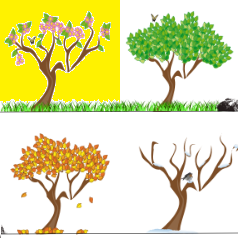
printemps
Définitions
| anglais > français | |
| spring | |
| 1. n. Printemps. | |
| It follows just as surely as spring follows winter. | |
| Cela suit juste aussi sûrement que le printemps suit l'hiver. | |
| 2. n. Source d'eau. | |
| The farmers found a natural spring to irrigate their crops. | |
| Les fermiers trouvèrent une source d'eau naturelle pour irriguer leurs cultures. | |
| 3. n. Ressort. | |
| This spring doesn't flex any more. We'll need to replace it. | |
| Ce ressort ne se plie plus. Nous allons avoir besoin de le remplacer. | |
| 4. v. Naître. | |
| 5. v. Sauter, s'élancer, jaillir. | |
| Et il allait s'élancer vers le fond de la vallée, quand une petite ombre à queue touffue barra l'ouverture et jappa : … | |
| anglais > anglais | |
| spring | |
| 1. v. To jump or leap. |  |
| He sprang up from his seat. | |
| 2. v. To pass over by leaping. | |
| to spring over a fence (in this sense, the verb spring must be accompanied by the preposition 'over'.) | |
| 3. v. To produce or disclose unexpectedly, especially of surprises, traps, etc. | |
| 4. v. (slang) To release or set free, especially from prison. | |
| 5. v. (Australia, slang) To suddenly catch someone doing something illegal or against the rules. | |
| 6. v. To come into being, often quickly or sharply. | |
| Trees are already springing up in the plantation. | |
| 7. v. To start or rise suddenly, as from a covert. | |
| 8. v. To cause to spring up; to start or rouse, as game; to cause to rise from the earth, or from a covert. | |
| to spring a pheasant | |
| 9. v. (nautical) To crack or split; to bend or strain so as to weaken. | |
| to spring a mast or a yard | |
| 10. v. To bend by force, as something stiff or strong; to force or put by bending, as a beam into its sockets, and allowing it to straighten when in place; often with in, out, etc. | |
| to spring in a slat or a bar | |
| 11. v. To issue with speed and violence; to move with activity; to dart; to shoot. | |
| 12. v. To move suddenly when pressure is released. | |
| A bow, when bent, springs back by its elastic power. | |
| 13. v. (intransitive) To bend from a straight direction or plane surface; to become warped. | |
| A piece of timber, or a plank, sometimes springs in seasoning. | |
| 14. v. To shoot up, out, or forth; to come to the light; to begin to appear; to emerge, like a plant from its seed, a stream from its source, etc.; often followed by up, forth, or out. | |
| 15. v. To issue or proceed, as from a parent or ancestor; to result, as from a cause, motive, reason, or principle. | |
| 16. v. (obsolete) To grow; to prosper. | |
| 17. v. (architecture, masonry, transitive) To build (an arch). | |
| They sprung an arch over the lintel. | |
| 18. v. (transitive, archaic) To sound (a rattle, such as a watchman's rattle). | |
| 19. n. A leap; a bound; a jump. | |
| 20. n. Traditionally the first of the four seasons of the year in temperate regions, in which plants spring from the ground and trees come into blossom, following winter and preceding summer. | |
| Spring is the time of the year most species reproduce. | |
| I spent my spring holidays in Morocco. | |
| You can visit me in the spring, when the weather is bearable. | |
| 21. n. Meteorologically, the months of March, April and May in the northern hemisphere or September, October and November in the southern. | |
| 22. n. The astronomically delineated period from the moment of vernal equinox, approximately March 21 in the northern hemisphere to the moment of the summer solstice, approximately June 21. (See (pedialite | |
| 23. n. Spring tide; a tide of greater-than-average range, that is, around the first or third quarter of a lunar month, or around the times of the new or full moon. | |
| 24. n. A place where water or oil emerges from the ground. | |
| This water is bottled from the spring of the river. | |
| 25. n. The property of a body of springing to its original form after being compressed, stretched, etc. | |
| the spring of a bow | |
| 26. n. Elastic power or force. | |
| 27. n. A mechanical device made of flexible or coiled material that exerts force when it is bent, compressed or stretched. | |
| We jumped so hard the bed springs broke. | |
| 28. n. (slang) An erection of the penis. | |
| 29. n. The source of an action or of a supply. | |
| 30. n. Any active power; that by which action, or motion, is produced or propagated; cause; origin; motive. | |
| 31. n. That which springs, or is originated, from a source. | |
| 32. n. A race; lineage. | |
| 33. n. A youth; a springald. | |
| 34. n. A shoot; a plant; a young tree; also, a grove of trees; woodland. | |
| 35. n. (obsolete) That which causes one to spring; specifically, a lively tune. | |
| 36. n. The time of growth and progress; early portion; first stage. | |
| 37. n. (nautical) A rope attaching the bow of a vessel to the stern-side of the jetty, or vice versa, to stop the vessel from surging. | |
| You should put a couple of springs onto the jetty to stop the boat moving so much. | |
| 38. n. (nautical) A line led from a vessel's quarter to her cable so that by tightening or slacking it she can be made to lie in any desired position; a line led diagonally from the bow or stern of a vessel | |
| 39. n. (nautical) A crack or fissure in a mast or yard, running obliquely or transversely. | |
| français > anglais | |
| printemps | |
| 1. n-m. spring (season) | |
| Je veux visiter la France au printemps. - I want to visit France in the spring. | |
Exemples de phrases
| The first season of the year is spring. La première saison de l'année c'est le printemps. Which season do you like best, spring or autumn? Qu'est-ce que tu préfères, le printemps ou l'automne? Do you know why spring rolls are called spring rolls? Savez-vous pourquoi les rouleaux de printemps sont ainsi nommés ? She will be a college student next spring. Elle sera étudiante dans le supérieur le printemps prochain. When spring comes, they dig up the fields and plant seeds. À l'arrivée du printemps, ils labourent les champs et les sèment. |
Revoir les mots précédents
| Netherlands | raspberry | boulder | root |
| frizzy | jellyfish | today | rainbow |
| Monday | bear | eighty-four | sixty-eight |
| teacher | fruit | car park | long |
Aléatoire
| car body | class | push | wax |
| watering can | cloud | coffee | nostril |
| watch | flea | mashed potato | otter |
| fingernail | tight | rodent | peephole |
| Apprendre |
| Mot du jour |
| Choix multiple |
| Cartes flash |
| Loto |
| Image cachée |
| Jeu du pendu |
| Mots cachés |
| Memory |
| Mots croisés |
Procurez-vous notre livre de mots croisés pour débutants

| Abonnez-vous au mot du jour |
| Email: |