

Le mot anglais du jour
thought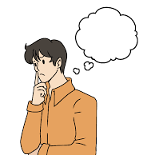
pensée
Définitions
| anglais > français | |
| thought | |
| 1. n. Idée, pensée. | |
| 2. n. Pensée (en général), fait de penser. | |
| 3. n. Façon de penser associée à un groupe humain. | |
| 4. v. Prétérit de to think. | |
| 5. v. Participe passé de to think. | |
| think | |
| 1. v. Penser, croire. | |
| What do you think of the current political situation? | |
| Do you really think so? | |
| 2. v. Songer. | |
| Think about what you're doing. | |
| Songez à ce que vous faites. | |
| He's thinking about leaving Paris. | |
| Il songe à quitter Paris. | |
| 3. v. Réfléchir. | |
| We have a problem. Let me think a minute. | |
| Nous avons un problème. Laisse-moi réfléchir une minute. | |
| 4. v. Trouver. | |
| I think you're right. | |
| Je trouve que tu as raison. | |
| anglais > anglais | |
| thought | |
| 1. n. Form created in the mind, rather than the forms perceived through the five senses; an instance of thinking. |  |
| 2. n. The process by which such forms arise or are manipulated; thinking. | |
| 3. n. A way of thinking (associated with a group, nation or region). | |
| "Eastern thought". | |
| français > anglais | |
| pensée | |
| 1. Participle. feminine singular of pensé | |
| 2. n-f. a thought (first attested 1176 in Chrétien de Troyes, Cligès, ed. A. Micha, 5246) | |
| 3. n-f. reflection, meditation, faculty of thinking (late 12th century) | |
| 4. n-f. (in the expression “être en pensée”) worry, concern (late 12th century) | |
| 5. n-f. the mind as the seat of thinking (c. 1200) | |
| 6. n-f. (obsolete) amorous attachment (c. 1200) | |
| 7. n-f. manner of thinking (c. 1215) | |
| 8. n-f. an idea coming up in one's mind (c. 1220 in Anseïs de Carthage, 332) | |
| 9. n-f. the guiding idea of a decision made or one's will (c. 1274 in Adenet Le Roi, Berte, 1644) | |
| 10. n-f. moral disposition (first quarter of 13th century) | |
| 11. n-f. an operation of the mind (since 1636) | |
| 12. n-f. idea expressed by an author in a literary or artistic work (since 1621) | |
| 13. n-f. thinking, worldview of an author | |
| Travestir la pensée d'un auteur. | |
| 14. n-f. a pansy (plant) (c. 1460) | |
Prononciation

Exemples de phrases
| I thought you'd be proud of me. Je pensais que tu serais fier de moi. I thought everybody liked it. Je pensais que tout le monde l'aimait. I thought that would interest you. Je pensais que ça vous intéresserait. He was otherwise than I thought. Il est différent de ce que je pensais. I thought you were one of us. Je pensais que tu étais l'un d'entre nous. |
Revoir les mots précédents
| boulder | root | frizzy | jellyfish |
| today | rainbow | Monday | bear |
| eighty-four | sixty-eight | teacher | fruit |
| car park | long | color | old |
Aléatoire
| wick | cantaloupe | tap | grain |
| staple | comic strip | vest | armpit |
| battery | playground | herring | size |
| car | needle | scales | drill |
| Apprendre |
| Mot du jour |
| Choix multiple |
| Cartes flash |
| Loto |
| Image cachée |
| Jeu du pendu |
| Mots cachés |
| Memory |
| Mots croisés |
Procurez-vous notre livre de mots croisés pour débutants

| Abonnez-vous au mot du jour |
| Email: |