

Le mot anglais du jour
time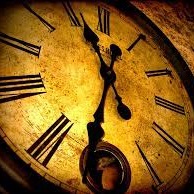
temps
Définitions
| anglais > français | |
| time | |
| 1. n. Temps. | |
| I don't have the time to do this. | |
| Je n'ai pas le temps de faire ça. | |
| Time is the fire in which we burn. | |
| As if you could kill time without injuring eternity. | |
| 2. n. Heure. | |
| What time is it? | |
| Quelle heure est-il ? | |
| 3. n. Fois, reprise. | |
| This is his first time. | |
| C'est sa première fois. | |
| Several times. | |
| Plusieurs fois. | |
| 4. n. Fois. (note) Voir aussi times. | |
| His car runs three times faster than mine. | |
| Sa voiture roule trois fois plus vite que la mienne. | |
| 5. v. Fixer l'heure de. | |
| 6. v. Calculer. | |
| 7. v. Chronométrer. | |
| 8. v. Minuter. | |
| anglais > anglais | |
| time | |
| 1. n. The inevitable progression into the future with the passing of present events into the past. |  |
| Time stops for nobody. the ebb and flow of time | |
| 2. n. (physics, usually) A dimension of spacetime with the opposite metric signature to space dimensions; the fourth dimension. | |
| Both science-fiction writers and physicists have written about travel through time. | |
| 3. n. (physics) Change associated with the second law of thermodynamics; the physical and psychological result of increasing entropy. | |
| Time slows down when you approach the speed of light. | |
| 4. n. (physics, reductionistic definition) The property of a system which allows it to have more than one distinct configuration. | |
| An essential definition of time should entail neither speed nor direction, just change. | |
| 5. n. A duration of time. | |
| 6. n. A quantity of availability of duration. | |
| More time is needed to complete the project. You had plenty of time, but you waited until the last minute. Are you finish | |
| 7. n. A measurement of a quantity of time; a numerical or general indication of a length of progression. | |
| a long time; Record the individual times for the processes in each batch. Only your best time is compared with the other compet | |
| 8. n. (slang) The serving of a prison sentence. | |
| The judge leniently granted a sentence with no hard time. He is not living at home because he is doing time. | |
| 9. n. An experience. | |
| We had a wonderful time at the party. | |
| 10. n. An era; (with the, sometimes in plural) the current era, the current state of affairs. | |
| Roman times; the time of the dinosaurs | |
| 11. n. (with possessive) A person's youth or young adulthood, as opposed to the present day. | |
| In my time, we respected our elders. | |
| 12. n. (only in singular, sports) Time out; temporary, limited suspension of play. | |
| 13. n. An instant of time. | |
| 14. n. How much of a day has passed; the moment, as indicated by a clock or similar device. | |
| Excuse me, have you got the time? What time is it, do you guess? Ten o’clock? A computer keeps time using a clock battery | |
| 15. n. A particular moment or hour; the appropriate moment or hour for something (especially with prepositional phrase or imperfect subjunctive). | |
| it’s time for bed; it’s time to sleep; we must wait for the right time; it's time we were going | |
| 16. n. A numerical indication of a particular moment. | |
| at what times do the trains arrive?; these times were erroneously converted between zones | |
| 17. n. An instance or occurrence. | |
| When was the last time we went out? I don’t remember. | |
| see you another time; that’s three times he’s made the same mistake | |
| Okay, but this is the last time. No more after that! | |
| 18. n. (of pubs) Closing time. | |
| Last call: it's almost time. | |
| 19. n. The hour of childbirth. | |
| 20. n. (as someone's time) The end of someone's life, conceived by the speaker as having been predestined. | |
| It was his time. | |
| 21. n. The measurement under some system of region of day or moment. | |
| Let's synchronize our watches so we're not on different time. | |
| 22. n. Ratio of comparison. | |
| your car runs three times faster than mine; that is four times as heavy as this | |
| 23. n. (grammar, dated) Tense. | |
| the time of a verb | |
| 24. n. (music) The measured duration of sounds; measure; tempo; rate of movement; rhythmical division. | |
| common or triple time; the musician keeps good time. | |
| 25. v. To measure or record the time, duration, or rate of. | |
| I used a stopwatch to time myself running around the block. | |
| 26. v. To choose when something begins or how long it lasts. | |
| The President timed his speech badly, coinciding with the Super Bowl. | |
| The bomb was timed to explode at 9:20 p.m. | |
| 27. v. (obsolete) To keep or beat time; to proceed or move in time. | |
| 28. v. (obsolete) To pass time; to delay. | |
| 29. v. To regulate as to time; to accompany, or agree with, in time of movement. | |
| 30. v. To measure, as in music or harmony. | |
| 31. interj. (tennis) Reminder by the umpire for the players to continue playing after their pause. | |
| français > anglais | |
| temps | |
| 1. n-m. time (in general) | |
| je n'ai pas le temps de faire ça - I haven't got (the) time to do that | |
| il faut encore du temps - I need more time | |
| Il est temps de commencer. - it's time to commence | |
| 2. n-m. weather | |
| le temps n'est pas bon ici - the weather is no good here | |
| quel temps fait-il ? - how's the weather? | |
| 3. n-m. (grammar) tense | |
| un temps composé - a compound tense | |
| un temps simple - a simple tense | |
| changez le temps du verbe - change the tense of the verb | |
Exemples de phrases
| I'm looking for a part-time job. Je cherche un travail à mi-temps. Always arrive on time. Arrive toujours à l'heure. Though this is a bulky book with over 1000 pages, I will have read it all by this time next week. Bien qu'il s'agisse d'un livre volumineux de plus de mille pages, je l'aurai lu la semaine prochaine à cette même heure. Excuse me, what time is it? Je vous prie de m'excuser, quelle heure est-il? What time did you get home? À quelle heure es-tu rentré? |
Revoir les mots précédents
| boulder | root | frizzy | jellyfish |
| today | rainbow | Monday | bear |
| eighty-four | sixty-eight | teacher | fruit |
| car park | long | color | old |
Aléatoire
| room | seventy-three | coast | shower |
| Austria | two | hair dryer | bright |
| laundry | cookie | wheel | conductor |
| nail file | petrol can | ferry | toaster |
| Apprendre |
| Mot du jour |
| Choix multiple |
| Cartes flash |
| Loto |
| Image cachée |
| Jeu du pendu |
| Mots cachés |
| Memory |
| Mots croisés |
Procurez-vous notre livre de mots croisés pour débutants
| Abonnez-vous au mot du jour |
| Email: |