

Le mot anglais du jour
storm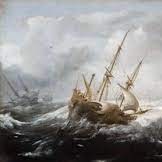
tempête
Définitions
| anglais > français | |
| storm | |
| 1. n. Orage, tempête. | |
| 2. v. Se déchaîner. | |
| 3. v. Donner l'assaut. | |
| anglais > anglais | |
| storm | |
| 1. n. Any disturbed state of the atmosphere, especially as affecting the earth's surface, and strongly implying destructive or unpleasant weather. |  |
| 2. n. A violent agitation of human society; a civil, political, or domestic commotion; violent outbreak. | |
| The proposed reforms have led to a political storm. | |
| 3. n. (meteorology) a wind scale for very strong wind, stronger than a gale, less than a hurricane (10 or higher on the Beaufort scale). | |
| 4. n. (military) A violent assault on a stronghold or fortified position. | |
| 5. v. (intransitive, with adverbial of direction) To move quickly and noisily like a storm, usually in a state of uproar or anger. | |
| She stormed out of the room. | |
| 6. v. (intransitive) To rage or fume; to be in a violent temper. | |
| 7. v. To assault (a stronghold or fortification) with military forces. | |
| Troops stormed the complex. | |
| 8. v. (impersonal) To have the weather be violent, with strong winds and usually rain, thunder, lightning, or snow. | |
| It stormed throughout the night. | |
| français > anglais | |
| tempête | |
| 1. n-f. storm, tempest | |
Prononciation

Exemples de phrases
| A storm was approaching our town. Une tempête s'approchait de notre ville. You know the phrase, we reap what we sow. I have sown the wind and this is my storm. Vous connaissez la phrase, «on récolte ce que l’on sème.» Moi, j’ai semé le vent, maintenant voilà ma tempête. That was no ordinary storm. Ce n'était pas une tempête ordinaire. After a storm comes a calm. Après la tempête, vient le calme. We had a big snow storm last weekend. Nous avons eu une grosse tempête de neige le week-end dernier. |
Revoir les mots précédents
| Netherlands | raspberry | boulder | root |
| frizzy | jellyfish | today | rainbow |
| Monday | bear | eighty-four | sixty-eight |
| teacher | fruit | car park | long |
Aléatoire
| sausage | jaw | starfish | palm tree |
| singer | fisherman | pineapple | detective |
| mirror | basement | paint | canoe |
| nine | hazelnut | carton | yawn |
| Apprendre |
| Mot du jour |
| Choix multiple |
| Cartes flash |
| Loto |
| Image cachée |
| Jeu du pendu |
| Mots cachés |
| Memory |
| Mots croisés |
Procurez-vous notre livre de mots croisés pour débutants

| Abonnez-vous au mot du jour |
| Email: |