

Le mot anglais du jour
sand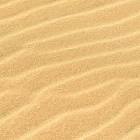
sable
Définitions
| anglais > français | |
| sand | |
| 1. n. Sable. | |
| 2. n. (Souvent au pluriel) Plage, étendue de sable. | |
| 3. n. Couleur sable. | |
| 4. v. Étaler du sable, sabler. | |
| anglais > anglais | |
| sand | |
| 1. n. Rock that is ground more finely than gravel, but is not as fine as silt (more formally, see grain sizes chart), forming beaches and deserts and also used in construction. |  |
| 2. n. (often in the plural) A beach or other expanse of sand. | |
| The Canadian tar sands are a promising source of oil. | |
| 3. n. (dated, circa 1920) Personal courage. | |
| 4. n. (geology) A particle from 62.5 microns to 2 mm in diameter, following the Wentworth scale. | |
| 5. n. A light beige colour, like that of typical sand. | |
| (color panel, DBC7AB) | |
| 6. n. (obsolete) A single grain of sand. | |
| 7. n. (figurative) A moment or interval of time; the term or extent of one's life (referring to the sand in an hourglass). | |
| 8. adj. Of a light beige colour, like that of typical sand. | |
| 9. v. To abrade the surface of (something) with sand or sandpaper in order to smooth or clean it. | |
| 10. v. To cover with sand. | |
| 11. v. (transitive, historical) To blot ink using sand. | |
| 12. n. (colloquial) A sandpiper. | |
| français > anglais | |
| sable | |
| 1. n-m. sand | |
| un grain de sable - a grain of sand | |
| 2. n-m. (tincture) the heraldic colour sable; black | |
Exemples de phrases
| Freedom. On my school notebooks. On my school desk and the trees. On the sand of the snow. I write your name. Liberté. Sur mes cahiers d'écolier. Sur mon pupitre et les arbres. Sur le sable de neige. J'écris ton nom. As far as the eye could see, there was nothing but sand. Aussi loin que l'œil pouvait porter, il n'y avait rien que du sable. He who buries his head in the sand today will grind his teeth tomorrow. Celui qui se fourre la tête dans le sable aujourd'hui, grincera des dents, demain. There are more stars in the sky than grains of sand on the earth. Il y a plus d'étoiles dans le ciel que de grains de sable sur la Terre. I don't like sand. It's coarse and rough and irritating and it gets everywhere. Je n'aime pas le sable. C'est grossier, rugueux, irritant et ça se colle partout. |
Revoir les mots précédents
| Netherlands | raspberry | boulder | root |
| frizzy | jellyfish | today | rainbow |
| Monday | bear | eighty-four | sixty-eight |
| teacher | fruit | car park | long |
Aléatoire
| Apprendre |
| Mot du jour |
| Choix multiple |
| Cartes flash |
| Loto |
| Image cachée |
| Jeu du pendu |
| Mots cachés |
| Memory |
| Mots croisés |
Procurez-vous notre livre de mots croisés pour débutants

| Abonnez-vous au mot du jour |
| Email: |