

Le mot anglais du jour
laugh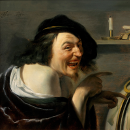
rire
Définitions
| anglais > français | |
| laugh | |
| 1. n. Rire. | |
| 2. n. Quelque chose d'amusant, ou, par extension, de ridicule. | |
| “And this rug,” he says, stomping on an old rag carpet. “How much do you suppose that cost?” | |
| 3. n. (Royaume-Uni) Se dit d'un personne marrante. | |
| 4. v. Rire. | |
| anglais > anglais | |
| laugh | |
| 1. n. An expression of mirth particular to the human species; the sound heard in laughing; laughter. |  |
| 2. n. Something that provokes mirth or scorn. | |
| 3. n. (NZ) A fun person. | |
| 4. v. (intransitive) To show mirth, satisfaction, or derision, by peculiar movement of the muscles of the face, particularly of the mouth, causing a lighting up of the face and eyes, and usually accompanied | |
| 5. v. (intransitive, obsolete, figuratively) To be or appear cheerful, pleasant, mirthful, lively, or brilliant; to sparkle; to sport. | |
| 6. v. (intransitive, followed by "at") To make an object of laughter or ridicule; to make fun of; to deride; to mock. | |
| 7. v. To affect or influence by means of laughter or ridicule. | |
| 8. v. To express by, or utter with, laughter. | |
| français > anglais | |
| rire | |
| 1. v. to laugh (de at, about) | |
| 2. n-m. laugh | |
Prononciation

Exemples de phrases
| His story made us laugh. Son histoire nous a fait rire. It made me laugh out loud. Ça m'a fait éclater de rire. She has a very beautiful laugh. Elle a un très joli rire. We laugh a lot. Nous avons beaucoup ri. Man is the only animal that can laugh. L’Homme est le seul animal qui peut rigoler. |
Revoir les mots précédents
| boulder | root | frizzy | jellyfish |
| today | rainbow | Monday | bear |
| eighty-four | sixty-eight | teacher | fruit |
| car park | long | color | old |
Aléatoire
| Apprendre |
| Mot du jour |
| Choix multiple |
| Cartes flash |
| Loto |
| Image cachée |
| Jeu du pendu |
| Mots cachés |
| Memory |
| Mots croisés |
Procurez-vous notre livre de mots croisés pour débutants
| Abonnez-vous au mot du jour |
| Email: |