| anglais > français | |
|
| dig | |
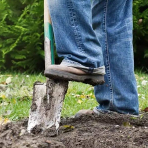
| 1. n. (Archéologie) (Familier) Fouilles (au pluriel). | |
| The student was very excited about going out on her first archaeological dig. | |
| 2. n. (Figuré) (Familier) Critique. | |
| She couldn't resist getting in a dig at him, after how he had treated her the previous night. | |
| 3. v. Creuser. | |
| 4. v. (Argot) Piger, suivre. | |
| You dig? | |
| Tu suis ? | |
| 5. v. (Argot) Aimer, accrocher, adorer. | |
| I dig you. I dig that artist. | |
| Je t'adore. Cet artiste m'accroche. | |
| anglais > anglais | |
|
| dig | |
| 1. v. (transitive, intransitive) To move hard-packed earth out of the way, especially downward to make a hole with a shovel. Or to drill, or the like, through rocks, roads, or the like. More generally, to m |  |
| They dug an eight-foot ditch along the side of the road. | |
| In the wintertime, heavy truck tires dig into the road, forming potholes. | |
| If the plane can't pull out of the dive it is in, it'll dig a hole in the ground. | |
| My seven-year-old son always digs a hole in the middle of his mashed potatoes and fills it with gravy before he starts to eat them. | |
| 2. v. To get by digging; to take from the ground; often with up. | |
| to dig potatoes; to dig up gold | |
| 3. v. (mining) To take ore from its bed, in distinction from making excavations in search of ore. | |
| 4. v. (US, slang) To work like a digger; to study ploddingly and laboriously. | |
| 5. v. (figurative) To investigate, to research, often followed by out or up. | |
| to dig up evidence; to dig out the facts | |
| 6. v. To thrust; to poke. | |
| 7. v. (volleyball) To defend against an attack hit by the opposing team by successfully passing the ball | |
| 8. n. An archeological or paleontological investigation, or the site where such an investigation is taking place. | |
| 9. n. (US, colloquial dated) A plodding and laborious student. | |
| 10. n. A thrust; a poke. | |
| He guffawed and gave me a dig in the ribs after telling his latest joke. | |
| 11. n. (dialect) A tool for digging. | |
| 12. n. (volleyball) A defensive pass of the ball that has been attacked by the opposing team. | |
| 13. v. (slang) To understand or show interest in. | |
| You dig? | |
| 14. v. (slang) To appreciate, or like. | |
| Baby, I dig you. | |
| 15. n. (medicine, colloquial) Digoxin. | |
| dig toxicity | |
| français > anglais | |
|
| bêcher | |
| 1. v. to dig (with a spade) | |
| 2. v. (dated) to badmouth, to slander | |