
Palabra Inglés del Día
bear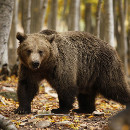
oso
Definiciones
| inglés > español | |
| bear | |
| 1. vt. Soportar, aguantar. | |
| 2. vt. Resistir, aguantar. | |
| 3. vt. Tolerar. | |
| 4. vt. Parir, dar a luz. | |
| My mother bore me in the southern wild. | |
| "Mi madre me dio a luz en el sur salvaje". | |
| 5. vt. Producir naturalmente, dar. | |
| A Peasant had in his garden an Apple-Tree which bore no fruit .... | |
| "Un campesino tenía en su jardín una manzano que no daba fruto ...". | |
| 6. vt. Cargar, llevar. | |
| Every book bears the stamp of the time and circumstances in which it was produced. | |
| "Todo libro lleva la estampa del tiempo y circunstancias en las que fue producido" | |
| 7. vt. Conducirse. | |
| 8. vt. Difundir chismes o historias, chismorrear. | |
| 9. vt. Virar. | |
| 10. vt. Tener, poseer. | |
| I bore no grudge against the Zulus. | |
| "Yo no tenía resentimiento contra Zulus". | |
| 11. vt. Aceptar obligaciones, responsabilidad, etc. | |
| 12. vt. Rendir, dar. | |
| I have an anxiety to bear testimony to the truth. | |
| "Tengo ansiedad de dar testimonio de la verdad". | |
| 13. vt. Estar localizado, situado. | |
| 14. s. Oso. | |
| 15. s. Persona que cree que los precios del mercado bajarán. | |
| 16. adj. Propio o relacionado con la baja de precios. | |
| 17. vt. Forzar o provocar la caída de los precios. | |
| inglés > inglés | |
| bear | |
| 1. s. A large omnivorous mammal, related to the dog and raccoon, having shaggy hair, a very small tail, and flat feet; a member of family Ursidae. |  |
| 2. s. (figuratively) A rough, unmannerly, uncouth person. | |
| 3. s. (finance) An investor who sells commodities, securities or futures in anticipation of a fall in prices. | |
| 4. s. (slang) A state policeman (short for smokey bear). | |
| 5. s. (slang) A large, hairy man, especially one who is homosexual. | |
| 6. s. (engineering) A portable punching machine. | |
| 7. s. (nautical) A block covered with coarse matting, used to scour the deck. | |
| 8. s. (cartomancy) The fifteenth Lenormand card. | |
| 9. v. (finance, transitive) To endeavour to depress the price of, or prices in. | |
| to bear a railroad stock | |
| to bear the market | |
| 10. adj. (finance, investments) Characterized by declining prices in securities markets or by belief that the prices will fall. | |
| The great bear market starting in 1929 scared a whole generation of investors. | |
| 11. v. To support or sustain; to hold up. | |
| This stone bears most of the weight. | |
| 12. v. To carry something. | |
| 13. v. To be equipped with (something). | |
| the right to bear arms | |
| 14. v. To wear or display. | |
| The shield bore a red cross. | |
| 15. v. (transitive, with witness) To declare as testimony. | |
| The jury could see he was bearing false witness. | |
| 16. v. To put up with something. | |
| I would never move to Texas—I can't bear heat. | |
| Please bear with me as I try to find the book you need. | |
| 17. v. To give birth to someone or something (may take the father of the direct object as an indirect object). | |
| In Troy she becomes Paris’ wife, bearing him several children, all of whom die in infancy. | |
| 18. v. To produce or yield something, such as fruit or crops. | |
| 19. v. (intransitive) To be, or head, in a specific direction or azimuth (from somewhere). | |
| The harbour bears north by northeast. | |
| By my readings, we're bearing due south, so we should turn about ten degrees east. | |
| Great Falls bears north of Bozeman. | |
| We are bearing toward the north side of the island. | |
| 20. v. (intransitive) To veer slightly in one direction (left or right, usually at a fork in the road) | |
| 21. v. (intransitive) To suffer, as in carrying a burden. | |
| 22. v. (intransitive) To endure with patience; to be patient. | |
| 23. v. (intransitive, usually with on, upon, or against) To press. | |
| 24. v. (intransitive military, usually with on or upon) Of a weapon, to be aimed at an enemy or other target. | |
| 25. v. (intransitive, figuratively) To take effect; to have influence or force; to be relevant. | |
| to bring arguments to bear | |
| How does this bear on the question? | |
| 26. v. To have a certain meaning, intent, or effect. | |
| 27. v. (transitive, obsolete) To conduct; to bring (a person). | |
| 28. v. To possess and use (power, etc.); to exercise. | |
| 29. v. To possess mentally; to carry or hold in the mind; to entertain; to harbour. | |
| 30. v. (transitive, obsolete) To gain or win. | |
| 31. v. To sustain, or be answerable for (blame, expense, responsibility, etc.). | |
| 32. v. To carry on, or maintain; to have. | |
| 33. v. To admit or be capable of (a meaning); to suffer or sustain without violence, injury, or change. | |
| 34. v. (reflexive, transitive) To behave or conduct (oneself). | |
| 35. v. To afford; to be (something) to; to supply with. | |
| 36. s. (colloquial) Something difficult or tiresome; a burden or chore. | |
| That window can be a bear to open. | |
| 37. s. alternative spelling of bere barley. | |
| español > inglés | |
| oso | |
| 1. n-m. bear (in general) | |
| 2. n-m. boar, male bear | |
| 3. n-m. (slang) bear (large hairy man, especially homosexual) | |
| Tengo un amigo delgado al que le gustan solo los osos barrigudos y velludos. - I have a skinny friend who only likes paunchy and hairy bears. | |
Pronunciación

Ejemplos
| Have you ever set a trap for a bear? ¿Alguna vez has puesto una trampa para osos? Bear in mind that you're a guest here and should behave accordingly. Ten en cuenta que tú aquí eres un invitado y deberías comportarte como corresponde. They found the track of a bear in the snow. Encontraron huellas de oso en la nieve. What you say does not bear on our problem. Lo que dices no está relacionado con nuestro problema. Suddenly a bear appeared before us. Un oso apareció repentinamente en frente de nosotros. |
Revise Palabras Anterior
Aleatorio
| clean | raspberry | tie | gate |
| pump | Thursday | January | paintbrush |
| curtain | breakfast | face | funnel |
| armpit | screw | battery | teaching |
| Aprender |
| Palabra del Día |
| Opción múltiple |
| Flashcards |
| Bingo |
| Imagen Oculta |
| Juego del Ahorcado |
| Sopa de Letras |
| Memory |
| Crucigrama |
| Suscribirse a la Palabra del Día |
| Email: |