

Englisches Wort des Tages
rabbit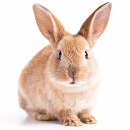
Kaninchen
Definitionen
| Englisch > Deutsch | |
| rabbit | |
| 1. Substantiv: | |
| 2. [1] Zoologie: Kaninchen, Karnickel | |
| 3. [2] das Felle eines Karnickels, Kaninchenfell | |
| 4. [3] Sport: schlechter Spieler eines Spieles (besonders im Tennis und Cricket) | |
| 5. Verb: | |
| 6. [1] (intransitiv) umgangssprachlich: (britisch) quasseln; unaufhörlich und in einer kindischen Weise sprechen | |
| 7. [2] (intransitiv) Kaninchen jagen | |
| Englisch > Englisch | |
| rabbit | |
| 1. subst. A mammal of the family Leporidae, with long ears, long hind legs and a short, fluffy tail. |  |
| The pioneers survived by eating the small game they could get: rabbits, squirrels and occasionally a raccoon. | |
| 2. subst. The fur of a rabbit typically used to imitate another animal's fur. | |
| 3. subst. A runner in a distance race whose goal is mainly to set the pace, either to tire a specific rival so that a teammate can win or to help another break a record; a pacesetter. | |
| 4. subst. (cricket) A very poor batsman; selected as a bowler or wicket-keeper. | |
| 5. subst. (comptheory) A large element at the beginning of a list of items to be bubble sorted, and thus tending to be quickly swapped into its correct position. Compare turtle. | |
| 6. v. (intransitive) To hunt rabbits. | |
| 7. v. (US, intransitive) To flee. | |
| The informant seemed skittish, as if he was about to rabbit. | |
| 8. v. (UK, intransitive) To talk incessantly and in a childish manner; to babble annoyingly. | |
| Stop your infernal rabbiting! Use proper words or nobody will listen to you! | |
| Commonly used in the form "to rabbit on". | |
| Deutsch > Englisch | |
| Kaninchen | |
| 1. n-n. rabbit | |
Aussprache

Beispielsätze
| Two small rabbits, a white rabbit and a black rabbit, lived in a large forest. Zwei kleine Kaninchen, ein weißes Kaninchen und ein schwarzes Kaninchen, lebten in einem großen Wald. This image can be seen either as a duck or as a rabbit, but not as both at the same time. Man kann auf diesem Bild entweder eine Ente oder ein Kaninchen erkennen, nicht aber beides zur gleichen Zeit. "Do you really wish that?" asked the little white rabbit. "Wünschst du dir das wirklich?", fragte das kleine weiße Kaninchen. Carrots are good for the eyes. Have you ever seen a rabbit with glasses on? Möhren sind gut für die Augen. Oder hast du schon einmal ein Kaninchen mit Brille gesehen? I drank from the bottle and before I noticed, I turned into a rabbit. Ich trank aus der Flasche, und ehe ich mich’s versah, verwandelte ich mich in ein Kaninchen. |
Die vorherigen Wörter ansehen
| escalator | vitamin | wall | fruit |
| chicken | pliers | stretch | cold |
| weather | maggot | Chinese | notebook |
| dozen | root | toothbrush | breeze |
Zufällig
| people | insecticide | continent | drill |
| bra | sneeze | vial | smoke |
| fruit | hay | choir | cymbal |
| diamonds | sieve | blade | telephone booth |
| Spiele und Übungen |
| Wort des Tages |
| Multiple Choice |
| Lernkarten |
| Bingo |
| Verstecktes Bild |
| Galgenmännchen |
| Wortsuchspiel |
| Memory |
| Kreuzworträtsel |
Holen Sie sich unser Kreuzworträtselbuch für Anfänger

| Das Wort des Tages abonnieren |
| E-Mail: |