

Englisches Wort des Tages
fruit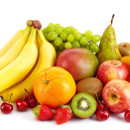
Obst
Definitionen
| Englisch > Deutsch | |
| fruit | |
| 1. Substantiv: | |
| 2. [1] die Frucht | |
| 3. [2] Obst | |
| [1] We've got lots of fruits. | |
| Wir haben eine Menge Früchte. | |
| [1] "The name pineapple is derived from the circumstance of the fruit being covered on all sides with small triangular scales, resembling the cone of a pine-tree." | |
| Englisch > Englisch | |
| fruit | |
| 1. subst. (botany) The seed-bearing part of a plant, often edible, colourful and fragrant, produced from a floral ovary after fertilization. |  |
| While cucumber is technically a fruit, one would not usually use it to make jam. | |
| 2. subst. Any sweet, edible part of a plant that resembles seed-bearing fruit, even if it does not develop from a floral ovary; also used in a technically imprecise sense for some sweet or sweetish vegetables | |
| Fruit salad is a simple way of making fruits into a dessert. | |
| 3. subst. An end result, effect, or consequence; advantageous or disadvantageous result. | |
| His long nights in the office eventually bore fruit when his business boomed and he was given a raise. | |
| 4. subst. Offspring from a sexual union. | |
| Blessed art thou amongst women and blessed is the fruit of thy womb. | |
| The litter was the fruit of the union between our whippet and their terrier. | |
| 5. subst. (dated, colloquial, derogatory) A homosexual or effeminate man. | |
| 6. subst. (as a modifier) Of, pertaining to, or having fruit; (of living things) producing or consuming fruit. | |
| 7. v. To produce fruit, seeds, or spores. | |
| Deutsch > Englisch | |
| Obst | |
| 1. subst. fruit (food) | |
| Heute esse ich nur Obst. - Today I only eat fruit. | |
| 2. subst. cocaine | |
Aussprache

Beispielsätze
| For we are but the shell and the leaf: the great death which each man has in himself, that is the fruit around which everything revolves. Denn wir sind nur die Schale und das Blatt: der grosse Tod, den jeder in sich hat, das ist die Frucht, um die sich alles dreht. You should wash fruit before you eat it. Man sollte Früchte vor dem Essen waschen. There's fruit and meat in this market. Es gibt Obst und Fleisch auf diesem Markt. I was hungry but there was no fruit or ice cream for me. Ich hatte Hunger, doch da war weder Obst noch Eis für mich. Eat the fruit before it goes bad. Iss das Obst, bevor es schlecht wird! |
Die vorherigen Wörter ansehen
| beehive | mother-in-law | escalator | vitamin |
| wall | fruit | chicken | pliers |
| stretch | cold | weather | maggot |
| Chinese | notebook | dozen | root |
Zufällig
| Spiele und Übungen |
| Wort des Tages |
| Multiple Choice |
| Lernkarten |
| Bingo |
| Verstecktes Bild |
| Galgenmännchen |
| Wortsuchspiel |
| Memory |
| Kreuzworträtsel |
Holen Sie sich unser Kreuzworträtselbuch für Anfänger

| Das Wort des Tages abonnieren |
| E-Mail: |