

Englisches Wort des Tages
child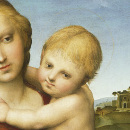
Kind
Definitionen
| Englisch > Deutsch | |
| child | |
| 1. Substantiv: | |
| 2. [1] Kind | |
| [1] I'm the father of two children. | |
| Ich bin der Vater zweier Kinder. | |
| [1] "They also relate that Zafir Khan said to his grandson, "Oh, my child, you are in a great hurry; though if you had not done so, all I have was intended for you." | |
| Englisch > Englisch | |
| child | |
| 1. subst. A person who has not yet reached adulthood, whether natural (puberty), cultural (initiation), or legal (majority) |  |
| Go easy on him: he is but a child. | |
| 2. subst. (obsolete) a female child, a girl. | |
| 3. subst. (with possessive) One's son or daughter, regardless of age. | |
| My youngest child is forty-three. | |
| 4. subst. (cartomancy) The thirteenth Lenormand card. | |
| 5. subst. (figuratively) A figurative offspring, particularly: | |
| 6. subst. A person considered a product of a place or culture, a member of a tribe or culture, regardless of age. | |
| The children of Israel. | |
| He is a child of his times. | |
| 7. subst. Anything derived from or caused by something. | |
| Poverty, disease, and despair are the children of war. | |
| 8. subst. (computing) A data item, process, or object which has a subservient or derivative role relative to another. | |
| The child node then stores the actual data of the parent node. | |
| Deutsch > Englisch | |
| Kind | |
| 1. subst. kid; child (young person) | |
| 2. subst. child; offspring (person with regard to his or her parents; also a baby animal or young animal, especially as the second component in numerous compound nouns) | |
| Er war das zweitgeborene Kind in der Familie. - He was the second-born child in the family. | |
| Er ist das Kind zweier blinder Eltern. - He is the child of two blind parents. | |
Aussprache
 ©
©Beispielsätze
| And what would you do if your child was like that? Was tätest du denn, wenn dein Kind so wäre? I don't suppose you ever really get over the death of a child. Ich nehme an, dass man niemals über den Tod seines Kind hinwegkommen wird. The couple named their first child Mark. Das Paar nannte sein erstes Kind Mike. You are not a child any more. Du bist kein Kind mehr. Yes, my child. Ja, mein Kind. |
Die vorherigen Wörter ansehen
| escalator | vitamin | wall | fruit |
| chicken | pliers | stretch | cold |
| weather | maggot | Chinese | notebook |
| dozen | root | toothbrush | breeze |
Zufällig
| Spiele und Übungen |
| Wort des Tages |
| Multiple Choice |
| Lernkarten |
| Bingo |
| Verstecktes Bild |
| Galgenmännchen |
| Wortsuchspiel |
| Memory |
| Kreuzworträtsel |
Holen Sie sich unser Kreuzworträtselbuch für Anfänger

| Das Wort des Tages abonnieren |
| E-Mail: |