| Portuguese > English |
|
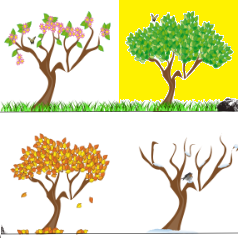
| verão |
| 1. n-m. summer |
| 2. v. verb form of ver |
| ver |
| 1. v. to see; to observe (to perceive with one’s eyes) |
| Vejo duas pessoas. - I see two people. |
| 2. v. to see (to be able to see; not to be blind or blinded) |
| Abriram uma escola para os que não veem. - They've opened a school for those who cannot see. |
| 3. v. (figurative, transitive) to see; to understand |
| Vê o que eu quero dizer? - Do you see what I mean? |
| 4. v. to see; to notice; to realise (to come to a conclusion) |
| Eu vi que todas essas pessoas querem que eu vá embora. - I saw that all these people want me to go away. |
| 5. v. to check (to verify some fact or condition) |
| Veja se o jantar já está pronto. - Check whether dinner is ready. |
| Fomos ver quando é que os meteorologistas previam que ia chover. - We went to check when the meteorologists predicted it was going to rain. |
| 6. v. (indtr, com, intr=1) to check with (to consult someone for information) |
| Veja com a secretária se já enviaram o document. - Check with the secretary whether the document has been sent. |
| 7. v. to watch (to be part of the audience of a visual performance or broadcast) |
| Fiquei a tarde inteira vendo TV. - I spent the whole afternoon watching TV. |
| 8. v. to see; to visit |
| Ela veio me ver no hospital. - She came to see me at the hospital. |
| 9. v. to pay (to face negative consequences) |
| Não acredito que mataram meu pai. Eles vão ver. - I can’t believe they killed my father. They’ll pay. |
| Após meses gastando sem parar, João se viu enterrado em dívidas. - After months spending non-stop, John found himself buried in debt. |
| 10. v. (indtr, para, -an indirect objective pronoun, .Brazil, .informal, ditr=1) to get used when ordering something from a waiter or attendant |
| Por favor, me vê 500g de queijo. - Please, see me 500 g of cheese. |
| Mandei o recepcionista ver um táxi para o meu pai. - I told the receptionist to get a cab for my dad. |
| Portuguese > Portuguese |
|
| verão |
| 1. Substantivo. estação do ano posterior à primavera e que antecede o outono; a segunda estação no hemisfério norte, iniciando-se em junho, no solstício |
| 2. Substantivo. tempo quente |
| 3. Substantivo. tempo da seca, estio |
| 4. Forma verbal. terceira pessoa do plural do futuro do presente do indicativo do verbo ver |
| English > Portuguese |
|
| summer |
| 1. Substantivo. verão |
| Shall I compare thee to a summer's day? (Devo comparar-lhe a um dia de verão?) - William Shakespeare. |