| Portuguese > English |
|
| fora |
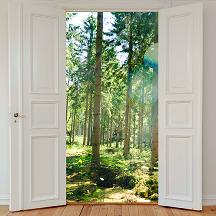
| 1. adv. outside (on the outside of a building or location) |
| Fiquei trancado fora da minha casa. - I got locked outside my house. |
| 2. adv. abroad; overseas (in another country) |
| Morei fora por dois anos. - I lived abroad for two years. |
| 3. adv. out (away from home or one’s usual place) |
| Hoje jantarei fora. - Today I’ll dine out. |
| 4. adv. away (to be discarded) |
| Joga esse lixo fora. - Throw away this trash. |
| 5. prep. except (with the exception of) |
| Todos leram o livro, fora o João. - Everyone read the book, except John. |
| 6. n-m. (Brazil, colloquial) rejection of a romantic proposal |
| 7. interj. out! (demanding that someone leave) |
| 8. v. verb form of ir |
| 9. v. verb form of ser |
| ir |
| 1. v. (indtr, para, a, em, até, intr=1) to go (to move to a destination) |
| Vamos a pé? - Do we go on foot? |
| Eles foram ao centro comercial. - They went to the shopping centre. |
| Queríamos ir para casa. - We wanted to go home. |
| 2. v. (auxiliary) will; to be going to; forms the future tense |
| Vou comprar um sapato. - I will buy a shoe. |
| Nós não íamos fazer nada. - We weren’t going to do anything. |
| 3. v. (auxiliary) to keep on; to go on; ~ on; forms the continuative aspect |
| A água vai escorrendo até acabar. - The water keeps on leaking until it is all gone. |
| 4. v. (takes a reflexive pronoun) to go; to leave; to depart |
| Os homens já se foram todos. - All the men have left already. |
| 5. v. (indtr, para, em, a, intr=1) to attend; to go to (to be present in an event) |
| Sinto muito, não poderei ir à sua festa. - I’m sorry, I won’t be able to go to your party. |
| 6. v. (indtr, até) to go on until; to last to |
| A batalha foi até as duas da manhã. - The battle went on until two AM. |
| 7. v. (indtr, em, intr=1) to do; to fare (to have a good or bad result) |
| Fui muito mal em quase todas as provas. - I did very bad in nearly all the tests. |
| 8. v. to be doing (formula used in greetings) |
| “Como vai?” “Vou bem, obrigado.” - “How are you doing?” “I am doing fine, thanks.” |
| 9. v. (takes a reflexive pronoun) to be gone (depleted, destroyed; no longer usable) |
| Porcaria! Minha TV se foi. - Damn it! My TV is gone. |
| 10. v. (euphemistic, takes a reflexive pronoun) to leave us; to depart (to die) |
| Uma oração para os que já se foram. - A prayer for those who have already left us. |
| 11. v. to go (to begin an action or process) |
| Um, dois, três, vai! - One, two, three, go! |
| O sinal verde ainda não foi! - The green light still didn’t light up. |
| Vamos! - Get on with it! |
| 12. v. (indtr, com) to match; to go with (to form a good combination with) |
| Este casaco não vai bem com os sapatos. - This jacket doesn't go well with the shoes. |
| 13. v. (indtr, com) to like or tolerate someone or something |
| Parece que ninguém vai comigo. - It seems nobody likes me. |
| 14. v. (indtr, por) to follow (to take into account when making choices) |
| Vai pela razão, não pelos sentimentos. - Follow reason, not feelings. |
| Se a luz não acender, pode encontrar o livro indo pelo tato. - If the light doesn’t turn on, you can find the book by following your sense of touch. |
| Vai por mim. - Trust me. |
| 15. v. to range from (to encompass values between two given extremes) |
| As perguntas iam do fácil ao difícil. - The questions ranged from easy to difficult. |
| 16. v. (poker, intransitive) to call (to match the amount of chips in the pot) |
| 17. v. to depart; to leave |
| 18. v. to pass away; to depart; to die |
| ser |
| 1. v. (copulative) to be (to have the given quality), especially a quality that is intrinsic or not expected to change, contrasting with estar which denotes a temporary quality |
| Ela está bonita, mas não é bonita. - She is looking beautiful, but she is not beautiful. |
| 2. v. to be (to be an example or type of, or the same as) |
| Pessoas são mamíferos. - People are mammals. |
| A soma de um e dois é três. - The sum of one and two is three. |
| 3. v. (auxiliary) to be (forms the passive voice) |
| O carro foi vendido pelo seu antigo dono. - The car was sold by its previous owner. |
| Espero que os criminosos sejam punidos. - I hope the criminals are punished. |
| 4. v. (impersonal) to be (indicates a point in time) |
| Que horas são? - What time is it? |
| São cinco horas. - It is five o’clock. |
| 5. v. (indtr, em, -another locational preposition) to be in (to be located in) |
| Minha casa é num bairro pobre. - My house is in a poor neighbourhood. |
| Onde são essas cidades? - Where are these cities? |
| 6. v. to be from (to have as one’s place of origin) |
| Esses equipamentos são da Alemanha. - These pieces of equipment are from Germany. |
| Nenhum de nós é de um país estrangeiro. - None of us is from a foreign country. |
| 7. v. to be (someone’s); to belong to |
| Essa casa é do prefeito. - This house belongs to the mayor. |
| Não mexa em nada que não for seu. - Don’t touch anything that is not yours. |
| 8. v. (indtr, para, aux=personal infinitive, .transitive, .or) to be for; to be to (to have as its purpose) |
| Esse tipo de faca é para cortar tomates. - This type of knife is for cutting tomatoes. |
| 9. v. (indtr, para, .impersonal, aux=personal infinitive) to be supposed to; should (introduces an expected or demanded action) |
| Não sei porque está demorando, já era para o filme ter começado. - I don’t know why it is taking so long, the film should have started already. |
| É para comermos toda a carne. - We are supposed to eat all the meat. |
| 10. v. to be; to cost (to be worth a given amount of money) |
| Duas maçãs são dez centavos. - Two apples are ten cents. |
| 11. v. to happen; to take place; to occur |
| O que será, será. - Whatever happens happens. |
| Quando é seu aniversário? - When is your birthday? |
| 12. v. (indtr, por, a favor de, contra) to be against or in favour of |
| Alguns foram contra a guerra, mas a maioria foi a favor. - Some were against the war, but most were in favour. |
| 13. v. (poetic, intransitive) to exist; to be |
| O mal não é. - Evil does not exist. |
| 14. v. (impersonal, transitive) used for emphasis |
| Eu é que vim. - I’m the one who came here. |
| 15. n-m. being (a living creature) |
| Portuguese > Portuguese |
|
| fora |
| 1. Advérbio. exteriormente |
| 2. Advérbio. em terra estranha |
| 3. Advérbio. outro lugar que não na casa em que se habita |
| Ontem saímos para jantar fora. |
| 4. Advérbio. afastado de |
| Mantenha fora do alcance de crianças e animais. |
| 5. Advérbio. no estrangeiro, em outro país |
| Não concordo com a ideia de que se vive melhor lá fora do que aqui. |
| 6. Preposição. exceto: |
| Nenhum dos alunos parece gostar de matemática, fora os que se saem muito bem nela. |
| 7. Preposição. além de: |
| Sofreu várias fraturas, fora os hematomas e cortes. |
| 8. Interjeição. saia! |
| 9. Interjeição. arreda! |
| 10. Substantivo. gafe, erro lamentável |
| Não acredito que deste o fora de não convidá-la para o casamento! |
| 11. Substantivo. (Brasil) rompimento de relações, geralmente amorosas: |
| Depois de tantos foras, era natural que desistisse de relacionamentos. |
| 12. Forma Verbal. primeira pessoa do singular do pretérito mais-que-perfeito do indicativo do verbo ser |
| 13. Forma Verbal. terceira pessoa do singular do pretérito mais-que-perfeito do indicativo do verbo ser |
| 14. Forma Verbal. primeira pessoa do singular do pretérito mais-que-perfeito do indicativo do verbo ir |
| 15. Forma Verbal. terceira pessoa do singular do pretérito mais-que-perfeito do indicativo do verbo ir |
| English > Portuguese |
|
| outside |
| 1. fora, para fora |
| 2. exterior |