| inglés > español | |
|
| female | |
| 1. s. Hembra. | |
| 2. s. Mujer. | |
| 3. adj. Femenino. | |
| inglés > inglés | |
|
| female | |
| 1. adj. Belonging to the sex which typically produces eggs (ova), or to the gender which is typically associated with it. |  |
| female authors, the leading male and female artists, a female bird cooing at a male, intersex female patients, a trans female vlogger | |
| 2. adj. Characteristic of this sex/gender. (Compare feminine), (m.) | |
| stereotypically female pastimes, an insect with typically female coloration | |
| 3. adj. Tending to lead to or regulate the development of sexual characteristics typical of this sex. | |
| the female chromosome; estrogen, the primary female sex hormone, is produced by both females and males | |
| 4. adj. (grammar, less common than 'feminine') Feminine; of the feminine grammatical gender. | |
| 5. adj. (figuratively) Having an internal socket, as in a connector or pipe fitting. | |
| 6. s. One of the female (feminine) sex or gender. | |
| 7. s. (sometimes offensive, see usage notes) A human member of the feminine sex or gender. | |
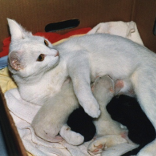
| 8. s. An animal of the sex that produces eggs. | |
| 9. s. (botany) A plant which produces only that kind of reproductive organ capable of developing into fruit after impregnation or fertilization; a pistillate | |
| español > inglés | |
|
| gata | |
| 1. n-f. female equivalent of gato, t=cat; she-cat, molly, queen, female cat | |
| 2. n-f. car-jack, jack | |