| inglês > português |
|
| whistle |
| 1. Substantivo. assobio; |
| 2. Substantivo. sibilo; |
| 3. Substantivo. silvo; |
| 4. Substantivo. zunido; |
| 5. Substantivo. apito. |
| 6. Verbo. assobiar; |
| 7. Verbo. apitar; |
| 8. Verbo. sibilar; |
| 9. Verbo. zumbir. |
| inglês > inglês |
|
| whistle |
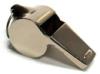
| 1. n. A device designed to be placed in the mouth and blown, or driven by steam or some other mechanism, to make a whistling sound. |
| 2. n. An act of whistling. |
| 3. n. A shrill, high-pitched sound made by whistling. |
| 4. n. Any high-pitched sound similar to the sound made by whistling. |
| the whistle of the wind in the trees |
| 5. n. (Cockney rhyming slang) A suit (from whistle and flute). |
| 6. n. (colloquial) The mouth and throat; so called as being the organs of whistling. |
| 7. v. To make a shrill, high-pitched sound by forcing air through the mouth. To produce a whistling sound, restrictions to the flow of air are created using the teeth, tongue and lips. |
| Never whistle at a funeral. |
| She was whistling a happy tune. |
| 8. v. To make a similar sound by forcing air through a musical instrument or a pipe etc. |
| The stream train whistled as it passed by. |
| 9. v. (intransitive) To move in such a way as to create a whistling sound. |
| A bullet whistled past. |
| 10. v. To send, signal, or call by a whistle. |
| português > inglês |
|
| apito |
| 1. n-m. whistle, id=device (device used to make a whistling sound) |
| 2. n-m. whistle, id=sound (shrill, high-pitched sound made by whistling) |
| 3. v. verb form of apitar |