| Engels > Nederlands |
|
| wolf |
| 1. wolf |
| Engels > Engels |
|
| wolf |
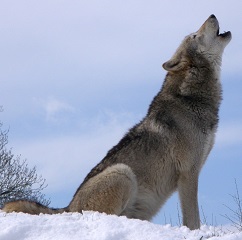
| 1. n. The gray wolf, specifically all subspecies of the gray wolf (Canis lupus) that are not dingoes or dogs. |
| 2. n. A man who makes amorous advances to many women. |
| 3. n. (music) A wolf tone or wolf note. |
| 4. n. (figurative) Any very ravenous, rapacious, or destructive person or thing; especially, want; starvation. |
| They toiled hard to keep the wolf from the door. |
| the bee wolf |
| 5. n. One of the destructive, and usually hairy, larvae of several species of beetles and grain moths. |
| 6. n. A white worm, or maggot, which infests granaries. |
| 7. n. (obsolete) An eating ulcer or sore. See lupus. |
| 8. n. A willying machine. |
| 9. v. To devour; to gobble; to eat (something) voraciously. |
| 10. v. (intransitive, slang) To make amorous advances to many women; to hit on women; to cruise for sex. |
| 11. v. (intransitive) To hunt for wolves. |
| Nederlands > Engels |
|
| wolf |
| 1. n-m. wolf, undomesticated Canis lupus |
| Ze gingen de wolven bekijken in de dierentuin. - They went to look at the wolves in the zoo. |
| 2. n-m. one of many other canids of the family Canidae, especially of the genus Canis |
| Er bestaan verschillende soorten wolven. - Various species of wolves exist. |