| inglês > português |
|
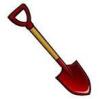
| shovel |
| 1. Substantivo. pá: |
| The children played in the sand with their shovels. (As crianças brinca;vam;r na areia com suas pás.) |
| 2. Substantivo. pá, quantidade medida em pás: |
| The leper entered the grave, and three shovels of earth were thrown onto the person's head. (O leproso era posto na cova, e três pás de terra eram jogadas na cabeça da pessoa.) |
| 3. Verbo. cavar: |
| I don't mind shoveling, but using a pickaxe hurts my back terribly. (Não me import;o;ar de cavar, mas usar uma picareta faz minhas costas doerem demais.) |
| 4. Verbo. mover materiais com uma pá: |
| The workers were shovelling gravel and tarmac into the pothole in the road. (Os operários estavam colocando cascalho e asfalto no buraco da rua.) |
| 5. Verbo. jogar ou atirar em grande quantidades. |
| inglês > inglês |
|
| shovel |
| 1. n. A hand tool with a handle, used for moving portions of material such as earth, snow, and grain from one place to another, with some forms also used for digging. Not to be confused with a spade, which |
| 2. n. (US) A spade. |
| 3. v. To move materials with a shovel. |
| The workers were shovelling gravel and tarmac into the pothole in the road. |
| After the blizzard, we shoveled the driveway for the next two days. |
| I don't mind shoveling, but using a pickaxe hurts my back terribly. |
| 4. v. (transitive, figuratively) To move with a shoveling motion. |
| Already late for work, I shovelled breakfast into my mouth as fast as possible. |
| português > inglês |
|
| pá |
| 1. n-f. shovel; spade (tool for digging and moving material) |
| 2. n-f. windmill blade |
| 3. n-f. the end of a paddle or oar with the blade |
| 4. n-m. (Portugal, informal, used in the vocative) dude; mate (term of informal address) |
| Estás bom, pá? - You alright, mate / dude? |
| Ó pá, aonde vais? - Hey man, where are you going? |
| 5. interj. (Portugal, informal) dude!; man! |
| Ena, pá! - Wow, dude! |
| 6. prep. (nonstandard)contraction of para a |