| inglese > italiano | |
|
| rabbit | |
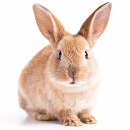
| 1. sost. (zoologia) coniglio | |
| 2. verb. (En-uk) parlare incessantemente | |
| 3. verb. (US) scappare, fuggire | |
| inglese > inglese | |
|
| rabbit | |
| 1. subst. A mammal of the family Leporidae, with long ears, long hind legs and a short, fluffy tail. |  |
| The pioneers survived by eating the small game they could get: rabbits, squirrels and occasionally a raccoon. | |
| 2. subst. The fur of a rabbit typically used to imitate another animal's fur. | |
| 3. subst. A runner in a distance race whose goal is mainly to set the pace, either to tire a specific rival so that a teammate can win or to help another break a record; a pacesetter. | |
| 4. subst. (cricket) A very poor batsman; selected as a bowler or wicket-keeper. | |
| 5. subst. (comptheory) A large element at the beginning of a list of items to be bubble sorted, and thus tending to be quickly swapped into its correct position. Compare turtle. | |
| 6. v. (intransitive) To hunt rabbits. | |
| 7. v. (US, intransitive) To flee. | |
| The informant seemed skittish, as if he was about to rabbit. | |
| 8. v. (UK, intransitive) To talk incessantly and in a childish manner; to babble annoyingly. | |
| Stop your infernal rabbiting! Use proper words or nobody will listen to you! | |
| Commonly used in the form "to rabbit on". | |
| italiano > inglese | |
|
| coniglio | |
| 1. n-m. rabbit (animal, meat) | |
| 2. n-m. buck (male rabbit) | |