

Chinese Word of the Day
婴儿yīng ér
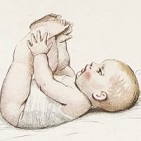
baby
Definitions
| Chinese > English | |
| 婴儿 | |
| 1. Simplified form of 嬰兒 | |
| 嬰兒 | yīng'ér |
| 1. n. baby; infant | |
| 2. n. (Taoism) lead (metal) | |
| English > Chinese | |
| baby | |
| 1. 婴孩 | |
| Components | |
| 婴 | |
| 1. Simplified form of 嬰 | |
| 嬰 | yīng |
| 1. baby; infant | |
| 儿 | |
| 1. Simplified form of 兒 | |
| 2. usage. May be used to specially write erhua (or the rhotic sound) in traditional Chinese, in contrast with child. | |
| 3. Variant of 人 | |
| 人 | rén |
| 1. man; person; people | |
| 人類 (rénlèi) - humans | |
| 那 人 是 誰? (Nà rén shì shéi?) - Who is that person? | |
| 嗰個 人jan4-2 係 邊個 嚟 㗎? - Who is that person? | |
| 有人 敲門 了。 (Yǒurén qiāomén le.) - Someone knocked on the door. | |
| 2. a person associated with a particular identity or trait; -er | |
| 主持人 (zhǔchírén) - host | |
| 北京人 (Běijīngrén) - Beijinger | |
| 香港人 - Hongkonger | |
| 3. body | |
| 人 在 心 不 在 (rén zài xīn bù zài) - the body is here but the heart is not | |
| 這 兩 天 人 不大 舒服。 (Zhè liǎng tiān rén bùdà shūfú.) - I lit. the body haven't been feeling that well these few days. | |
| 今天 上午 你 人 在 哪? (Jīntiān shàngwǔ nǐ rén zài nǎ?) - Where have you been this morning? | |
| 4. everybody; everyone | |
| 人手.一冊 (rénshǒu yīcè) - It's a bestseller. (lit. Everyone has a copy.) | |
| 人所共知 (rénsuǒgòngzhī) - common knowledge | |
| 5. other people; others | |
| 人云.亦云 (rényún yìyún) - to follow the crowd (lit. to say what others say) | |
| 害人害己 (hàirénhàijǐ) - to harm others and onself | |
| 6. physical, psychological or moral quality or condition; character; personality | |
| 就我所知,他 人 不錯。 (Jiùwǒsuǒzhī, tā rén bùcuò.) - As far as I know, he is kind (lit. his personality is not bad). | |
| 我 不 知道 他 是 什麼 人。 (Wǒ bù zhīdào tā shì shénme rén.) - I don't know what kind of person he is. | |
| 佢 到底 係 咩 人 嚟㗎? - Exactly what kind of person is he? | |
| 7. manpower; worker; employee | |
| 我們 公司 正 缺 人。 (Wǒmen gōngsī zhèng quē rén.) - Our company is short on manpower right now. | |
| 8. talent; person of talent | |
| 9. (obsolete) common people; commoner | |
| 10. adult; grown-up | |
| 長zhǎng大 成人 (zhǎngdà chéng'rén) - to grow up to be an adult | |
| 11. (Cantonese) (used as a dummy pronoun); someone; others | |
| 12. (Zhao'an Hakka) pluralizes a personal pronoun | |
| ?人、你人、佢人 (ngài ngìn, ngì ngìn, kì ngìn) - we, you all, they | |
| 13. (obsolete) sexual intercourse | |
| 人道 (réndào) - sexual intercourse | |
| 人事 (rénshì) - sexual intercourse | |
| 14. (obsolete) company; companion; friend | |
| 15. artificial; man-made | |
| 人禍 (rénhuò) - human disaster | |
| 16. (obsolete) human affairs; ways of the world | |
| 17. (obsolete) mortal world; earthly word | |
| 18. (obsolete) Alternative form of sc=Hani, 仁 (kernel, tr=rén) | |
| 19. (obsolete) Alternative form of sc=Hani, 仁 (charity, tr=rén) | |
| 20. (obsolete) Alternative form of sc=Hani, 仁 (loving; kind, tr=rén) | |
| 21. (Beijing) Lenition of rénjia. | |
| 別 磨蹭ceng 啦,人 在zǎi 外頭tou 等 著着zhe 我們 呢! (Bié móceng la, rén zǎi wàitou děng zhe wǒmen ne!) - Stop dilly-dallying. He/She/They is/are waiting for us outside!, M-UIB | |
| 哎呀,人 孩子zi 考上shang ^哈佛 ^大學 啦,多 出息xi 呀! (Āiya, rén háizi kǎoshang Hāfó Dàxué la, duō chūxi ya!) - Geez, his/her/their kid got into Harvard University. How promising!, M-UIB | |
| 人 別人ren 都 不 吱zī聲sheng兒r,就 他 把 這zhèi 事兒r 給 說 出chu來lai 了。 - , M-UIB, Rén biéren dōu bù zīshengr, jiù tā bǎ zhèi shìr gěi shuō chulai le. | |
| 22. (Taishanese) paternal grandmother | |
| 兒 | ér |
| 1. (now, in compounds) child | |
| 兒童 - child | |
| 嬰兒 - infant child; baby | |
| 2. one's own child; son | |
| 兒孫 - child(ren) and grandchild(ren) | |
| 妻兒 - wife and child(ren) | |
| 一 兒 一 女 - one son and one daughter | |
| 3. (now, in compounds) (male) adolescent | |
| 健兒 - good athlete | |
| 4. (attributive, of animals) male | |
| 兒馬 - male horse | |
| 5. (Non-syllabic noun diminutive suffix.) | |
| 盆兒r - small basin | |
| 小狗-兒r - puppy | |
| 6. (Suffix after nouns that does not indicate diminutiveness.) | |
| 味兒r - taste | |
| 汁兒r - juice | |
| 電影兒r - film | |
| 7. (Suffix added to some verbs or adjectives to form nouns.) | |
| 吃兒r - food; something to eat | |
| 亮兒r - light | |
| 尖兒r - tip | |
| 短兒r - fault | |
| 8. (Suffix after a limited number of verbs.) | |
| 玩兒r - to play | |
| 火兒r - to be angry | |
| 9. (Suffix after certain nouns that result in a different meaning from the unsuffixed form.) | |
| 頭兒r - chief; leader | |
| 白麵兒r - heroin | |
| 老家兒r - one's elders | |
| 10. (Suffix after reduplicated adjectives.) | |
| 慢慢mān兒r - slowly | |
| 11. =====Usage notes===== | |
| 12. Alternative form of 齯 (teeth grown in old age) | |
| 13. Alternative form of 倪 (small and weak) | |
| 14. Alternative form of 郳 | |
Pronunciation

yīng ér
Review previous words
Random
| Learn these with |
| Multiple Choice |
| Hidden Image |
| Bingo |
| Hangman |
| Word Search |
| Crosswords |
| Memory |
| Flash Cards |
| Subscribe to Word of the Day |
| Email: |